Subterranean termites cause significant structural damage in coastal Florida because high humidity and sandy, porous soil allow colonies to forage beneath foundations year-round. In West Palm Beach neighborhoods such…
Subterranean termites cause significant structural damage in coastal Florida because high humidity and sandy, porous soil allow colonies to forage beneath foundations year-round. In West Palm Beach neighborhoods such as El Cid, Flamingo Park, and Grandview Heights, historic frame-vernacular homes and ground-level stem walls sit vulnerable to moisture-seeking Formosan and Eastern subterranean species. Farther west in Ibis Golf & Country Club and Villages of Palm Beach Lakes, concrete slab construction creates hidden entry routes where plumbing penetrations pierce the slab. An effective subterranean barrier bypasses the standard corporate playbook of locking owners into non-negotiable multi-year contracts, focusing instead on stopping sub-slab entry through heavy-duty, targeted perimeter interventions.
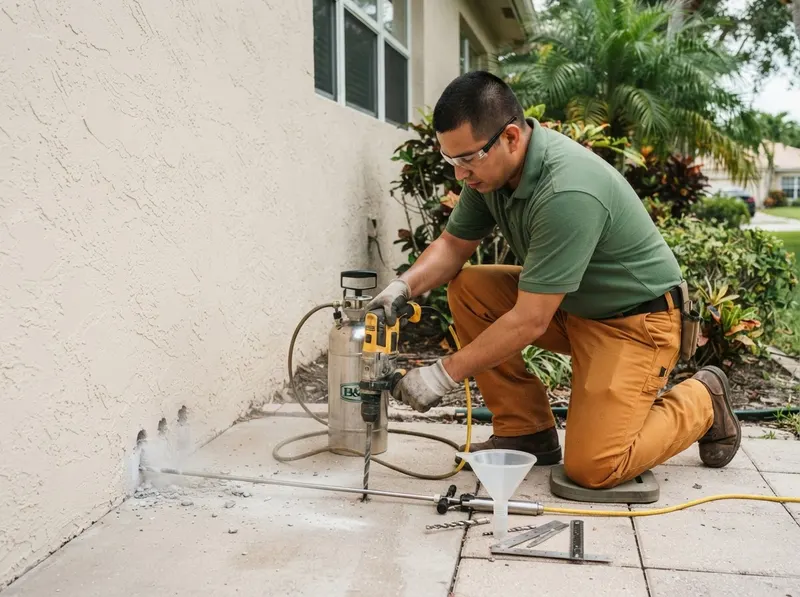
Treatment selection depends on structural foundation layout and surrounding soil conditions. Liquid non-repellent termiticide barriers require digging a 6-inch by 6-inch trench along the exterior foundation perimeter, treating backfilled soil at a standard volume of 4 gallons per 10 linear feet. If a property features exterior concrete patios, driveways, or abutting pavers, technicians drill 0.5-inch access holes spaced roughly 12 inches apart to inject termiticide beneath the slab, which are then patched flush. For properties directly adjacent to water tables, such as lakefront parcels in Riverwalk or coastal grounds along SoSo (South of Southern) and Northwood Village, low-impact perimeter bait stations installed every 10 to 15 feet deliver chitin synthesis inhibitors directly to workers without saturating coastal runoff.
The trade-off between perimeter liquid barriers and bait arrays centers on immediacy versus structural disruption. A liquid non-repellent barrier provides immediate contact protection, transferring active agent across the worker population within days, but requires concrete drilling along abutting hardscapes. Perimeter bait arrays avoid drilling pool decks or decorative stone around Downtown West Palm Beach properties, but require 60 to 90 days of active feeding before the colony’s reproductive caste completely collapses. Both methods eliminate subterranean colonies without requiring whole-structure fumigation or tenting.
Every job gets a firm, written price after a free on-site visit.
Tell us about your subterranean termite treatment job in West Palm Beach and we'll send a clear, written quote, usually the same day.
 Frontier House Pest Control